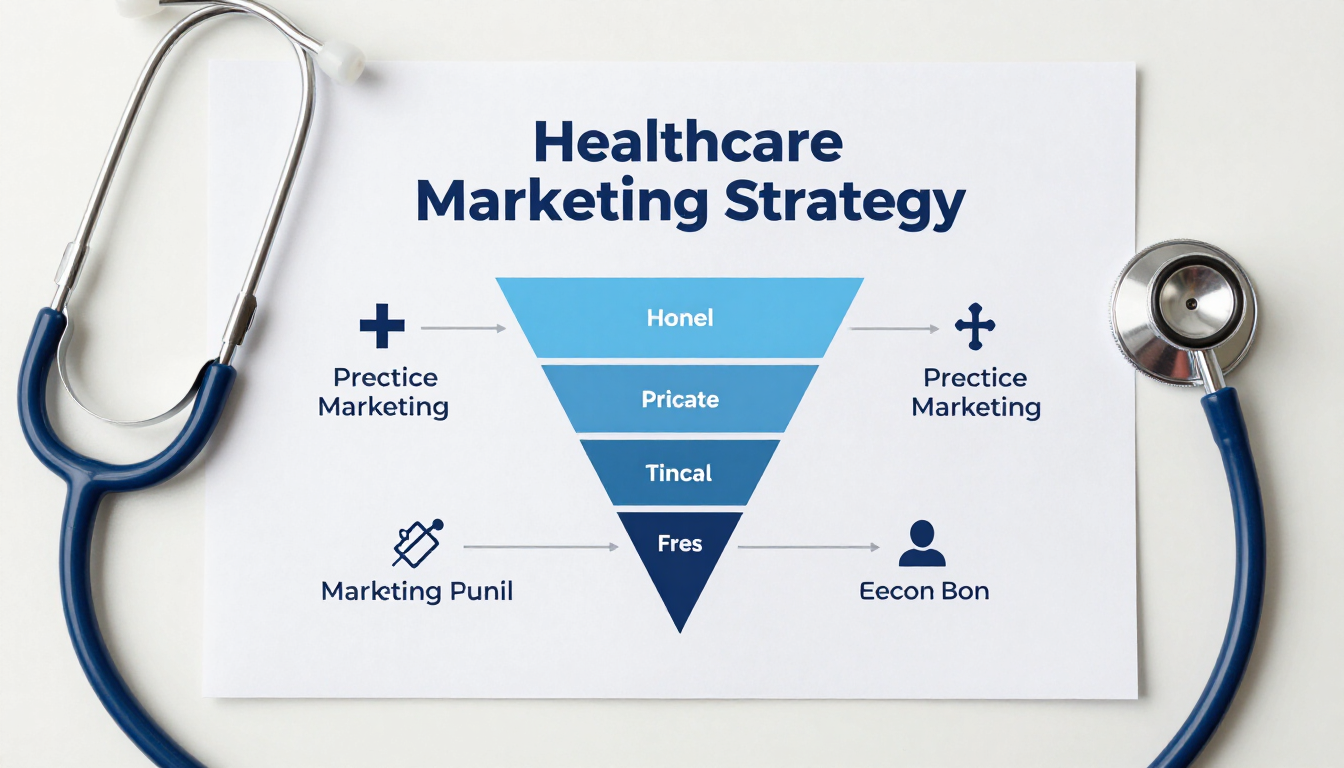
Marketing a medical practice online is not about being everywhere — it is about being in the right places with the right message for the patients you actually want. This guide gives you a repeatable framework, then shows how it plays out for a dental practice, a primary care clinic, and a specialty practice, so you can see what changes and what stays the same.
The biggest mistake practices make online is trying to appeal to everyone. A message aimed at "anyone who needs healthcare" resonates with no one. Effective online marketing starts by defining the patient you want, then building every channel — website, search, ads, content, reviews — around winning that specific person. The framework below works for any practice; the examples show how to adapt it.
1. Define the ideal patient
Before you write a headline or run an ad, get specific about who you want to attract. "New patients" is not specific enough. Are they families looking for a dentist, adults seeking a primary care physician accepting new patients, or patients with a specific condition your specialty treats? The clearer the picture — their concerns, the words they search, the questions they ask — the more every other decision falls into place.
Write down the top three to five patient types you want more of, the treatments they search for, and the worries that stop them booking. That single page becomes the brief for your website, ads, and content.
2. Build a website around appointments
Your website exists to book appointments, not to be a brochure. That means a hero that names the patient’s concern, one obvious booking action repeated down the page, proof (reviews and credentials) near the booking buttons, and a short form that asks for the minimum. A site that converts well makes every other marketing investment work harder. Our Medical Web Design service is built around exactly this.
3. Improve local visibility
For almost every practice, the highest-intent patients are nearby and searching right now. Local visibility means a complete, active Google Business Profile, consistent business information across directories, location and service pages on your site, and a steady stream of reviews. Done well, local search becomes your most reliable, lowest-cost source of new patients. See our Local SEO for doctors guide for the specifics.
4. Publish useful health content
Patients research before they book. They search "how much does", "how long does", "is [treatment] right for me" — and the practices that answer those questions clearly earn trust and capture long-tail searches. Give each treatment its own page, answer the real questions patients ask, and keep the content accurate and compliant. This is the foundation of both SEO and conversion. Our Health Content & Creative service handles this end-to-end.
5. Use Google Ads for immediate demand
While SEO matures, Google Ads captures active demand right now. The key is intent: target the keywords patients actually search when ready to book, send them to a matching landing page, and track conversions back to appointments. Ads are also the fastest way to learn which treatments and messages convert — data that then informs your SEO content. Explore our Google Ads for Patient Acquisition service for the full approach.
6. Improve reviews and referrals
Reviews are the second-strongest local ranking factor and the strongest conversion factor. Build a simple, repeatable process — a text or email after a good visit with a direct link to your profile — and reply to every review within 24 hours. A steady stream of recent reviews that mention your treatments and location does double duty: it helps you rank and persuades the next patient to choose you.
7. Measure patient acquisition cost
The number that matters is cost per acquisition — how much you spend to book one patient, per channel. Track it with proper conversion tracking and a measurement plan that ties every enquiry to its source. When you know your real cost per patient from ads versus SEO versus referrals, you can shift budget toward what earns its place and stop guessing. Our Healthcare Analytics service builds this foundation.
How it looks in practice
Dental practice example
A family dentist wants more Invisalign and cosmetic patients. Ideal patient: adults researching clear aligners and cosmetic work, cost-conscious but quality-driven. Website: dedicated Invisalign and cosmetic pages with before-and-after proof and a "book a consultation" button. Local: Google Business Profile optimised for "cosmetic dentist" with monthly photos. Ads: targeted at "Invisalign near me" and "teeth whitening cost" with matching landing pages. Content: a clear "how much does Invisalign cost" page answering the question patients actually ask.
Primary care example
A primary care clinic needs new patients and wants to highlight same-day appointments. Ideal patient: adults and families looking for a doctor accepting new patients nearby. Website: a "new patients" page explaining how to join, insurance accepted, and an online booking button. Local: profile optimised for "primary care doctor" with "accepting new patients" in the description. Ads: targeting "doctor near me accepting new patients" with a landing page that makes booking effortless. Content: pages on annual physicals, chronic care, and what to expect at a first visit.
Specialty practice example
A dermatology practice wants more patients for specific procedures. Ideal patient: adults searching for a specific condition or treatment. Website: a page per condition and procedure — acne, mole checks, cosmetic treatments — each with FAQs and a booking action. Local: profile optimised for "dermatologist" with service lists. Ads: targeted at high-intent procedure keywords with dedicated landing pages. Content: authoritative condition pages that answer patient questions and feed AI overviews.
What stays the same
Across every specialty, the framework is identical: define the patient, build around appointments, win local search, answer questions with content, capture demand with ads, earn reviews, and measure cost per acquisition. Only the keywords, pages, and messaging change.
Want a patient-growth plan built around your specialty and market? Tell us your goals and we will send a free, no-pressure plan within one business day.
See how Northstar creates a patient-growth plan