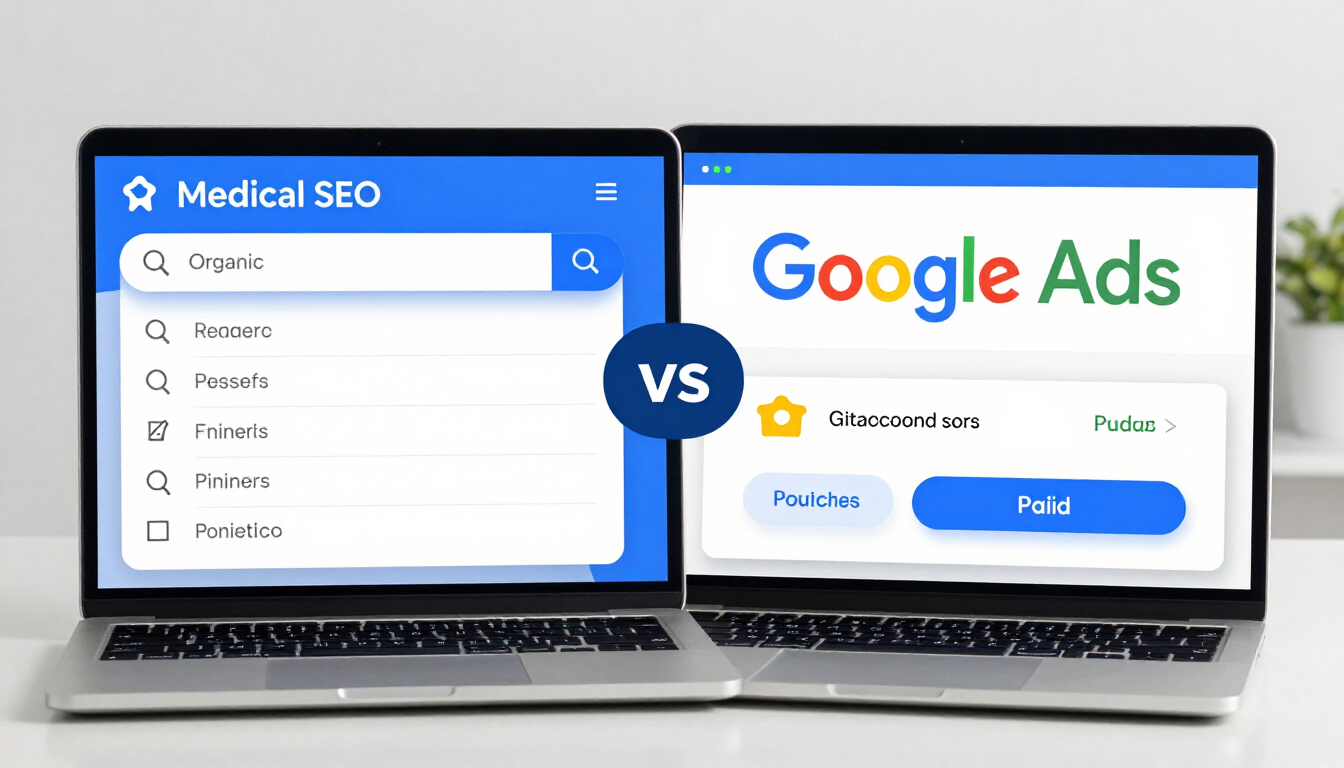
Google Ads can generate visibility quickly, while SEO typically builds a longer-term source of organic patient traffic. Many practices benefit from using both. This comparison breaks down how each channel works, where each one wins, and how to decide — based on speed, long-term value, cost structure, control, and competition — which fits your practice right now.
The "SEO versus Google Ads" question is really a question about timing and margin. Ads buy speed; SEO builds an asset. They are not rivals — they are two tools that do different jobs, and the strongest growth plans use both. The right choice depends on whether you need patients this month or a compounding channel that pays for years.
Speed
Google Ads is the fastest patient-acquisition channel available. You can launch and have qualified enquiries within weeks, because you pay to appear at the top of results immediately. SEO is slower — meaningful organic results typically take three to six months of consistent work. If you need patients now, ads win on speed; if you can invest for the future, SEO rewards patience.
Long-term value
SEO builds a compounding asset. Every page that ranks keeps producing clicks and appointments without per-click costs, month after month, and rankings are harder for competitors to displace than ad position. Ads stop the moment you stop paying. Over a one-to-two-year horizon, SEO usually delivers the lowest cost per acquisition of any channel — but only after it has matured.
Cost structure
With Google Ads, you pay per click whether or not it converts, plus management — so waste management matters as much as budget. With SEO, you pay for ongoing work rather than per click, so your cost per acquisition drops as traffic grows. Costs for both vary by specialty, location, and competition, so model your own rather than copying another practice’s numbers. See our guide to medical practice marketing cost for the categories.
Control
Google Ads gives you precise control: you choose the keywords, geography, schedule, budget, and landing page, and you can scale up or down and see results move. SEO offers less direct control — you influence rankings through optimisation, but Google decides where you rank and can change its algorithm. If you want predictable, adjustable volume, ads offer more control; if you want durable presence, SEO offers more staying power.
Competition
In highly competitive markets, ad clicks for valuable keywords can be expensive, and organic rankings can take longer to win. In less competitive areas, SEO can deliver results faster and cheaper. Your local competition shapes which channel gives you the better return — which is why a channel recommendation should be based on your specific market, not a general rule.
Best use cases
Use Google Ads when you need patients quickly, want to promote a new service, need to fill appointment gaps, or want to test which keywords and treatments convert. Use SEO when you want a durable, lower-cost-per-patient channel that compounds, when you want to capture the long-tail of patient questions, and when you want presence that does not disappear when spend pauses.
How both channels work together
The strongest plans run both. Ads capture immediate demand and reveal which keywords and treatments convert — data that then informs your SEO content. As SEO matures and organic appointments climb, you can dial ad spend back, lowering your blended cost per acquisition without losing volume. Keep a baseline ad presence for new services and seasonal demand, and let SEO carry the compounding load.
- 1Launch ads to capture patient intent and learn what converts fastest.
- 2Feed those insights into your treatment and condition pages for SEO.
- 3As organic rankings grow, shift budget from ads to SEO for better margin.
- 4Keep a baseline ad presence for new services and seasonal demand.
The simple rule
Use Google Ads when you need patients now or want to test what converts. Use SEO when you want a durable, low-cost-per-patient channel that compounds. Use both when you want speed today and margin tomorrow.
Not sure which channel fits your practice and market? We will model the cost per acquisition for both — with real numbers from your area — and recommend a mix, before you spend a cent.
Get a channel recommendation based on your practice and market